" height="21.74796186902578px" id="t3MdhTE9r" transform="translate(0 0)" width="90.99999762294988px"/></g></svg>)
The Enterprise Brain
Blog
Why we built a platform

Ashish Agrawal
Co-Founder & CTO
Share
While many point solutions and generic assistants claim to serve the entire legal industry, Eudia took a different path. We engineered a platform exclusively for in-house legal departments at the world's most important organizations, designed to deliver materially better outcomes, faster, in environments where precision, control, and trust matter most.
Large enterprises operate on a fundamentally different set of incentives. Fortune 500 companies are not optimizing for hours worked; they are optimizing for outcomes delivered. They require speed, risk mitigation, and cost certainty. When a global corporation needs to conduct due diligence on an M&A data room or approve a marketing campaign for launch, the objective is to complete the task with zero defects in minimum time, not to maximize billable hours.
To bridge this gap, we realized that it wasn't enough to simply build better tools for the existing process. We had to architect a system aligned with the buyer, not the service provider. We had to replace "outsourced effort" with "internalized intelligence."
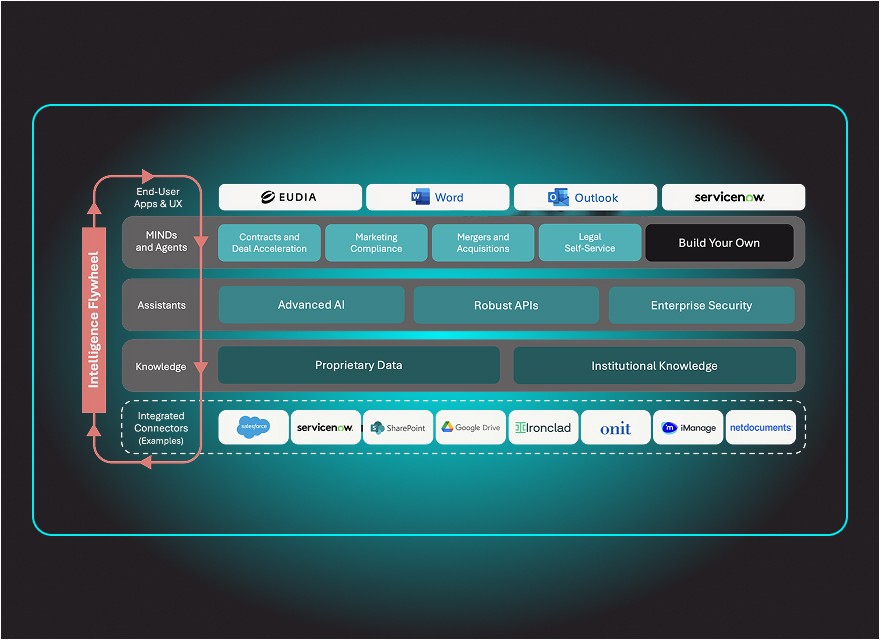
This required moving beyond standard Generative AI wrappers to build a proprietary "Company Brain": a cohesive, secure, and scalable infrastructure designed to reason with institutional context. Here is how we engineered the platform to solve the "zero-tolerance" problems of the modern enterprise.
Moving Beyond the "Prompt"
To shift the center of gravity from outside counsel back to the internal legal team, the technology must be capable of complex reasoning, not just text generation. Real-world legal and enterprise data is messy, multimodal, and deeply interconnected.
We constructed the Company Brain on four proprietary intelligence layers that allow the system to function as a reliable, outcome-driven partner.
1. Percept: Vision-Language Models & Structure
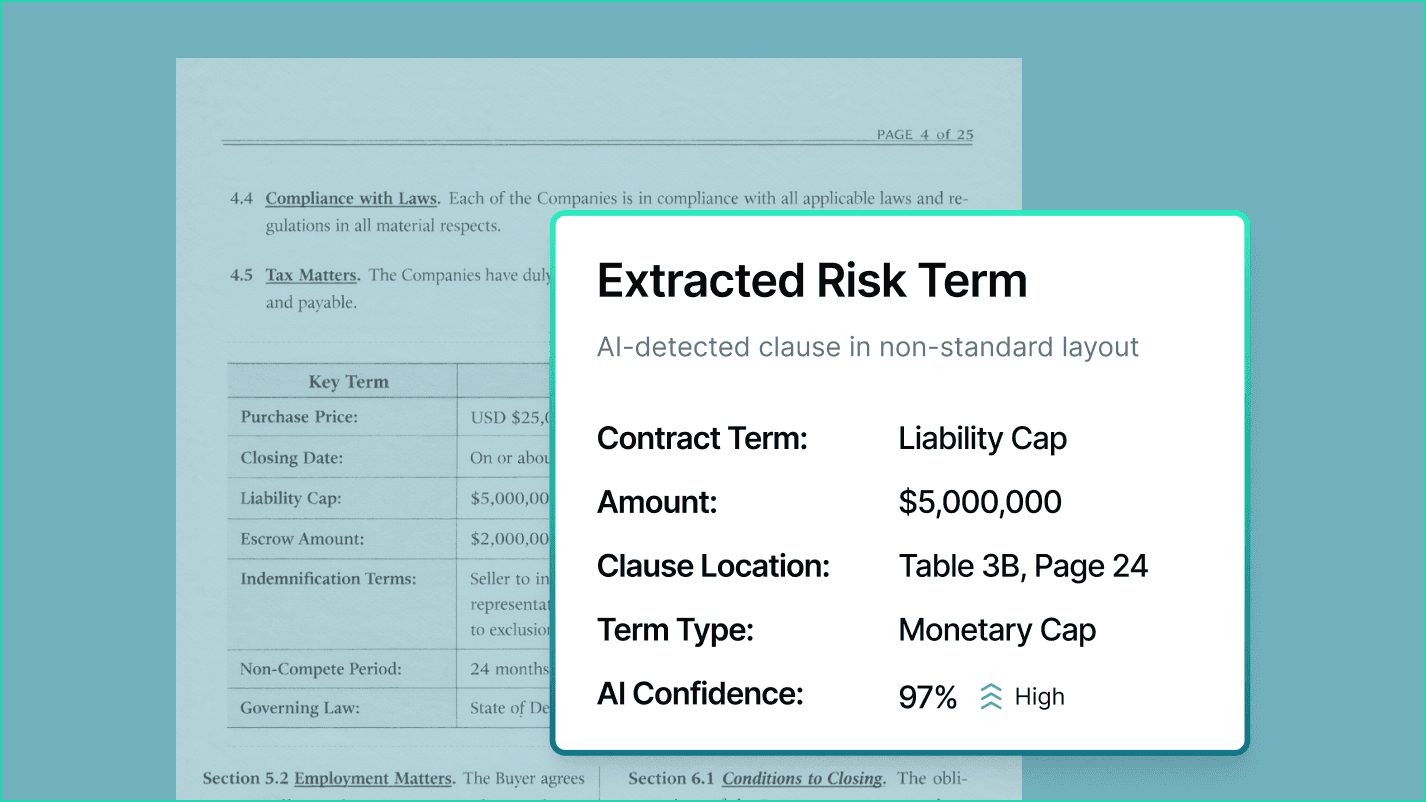
Legal documents are visual structures, not just strings of text. A standard LLM or OCR tool often fails to understand that a financial liability cap hidden in a table cell relates specifically to the column header above it.
To solve this, we built a "Content Intelligence" pipeline. By combining lightweight traditional computer vision (Canny Edge Detection) with heavy-duty Vision-Language Models (VLMs), the system "sees" the document. It interprets layouts, page boundaries, and visual hierarchies. This ensures that when we ingest 100,000+ documents, we capture the semantic meaning required for decision-making, not just the raw text.
2. Understand: The Agentic Graph
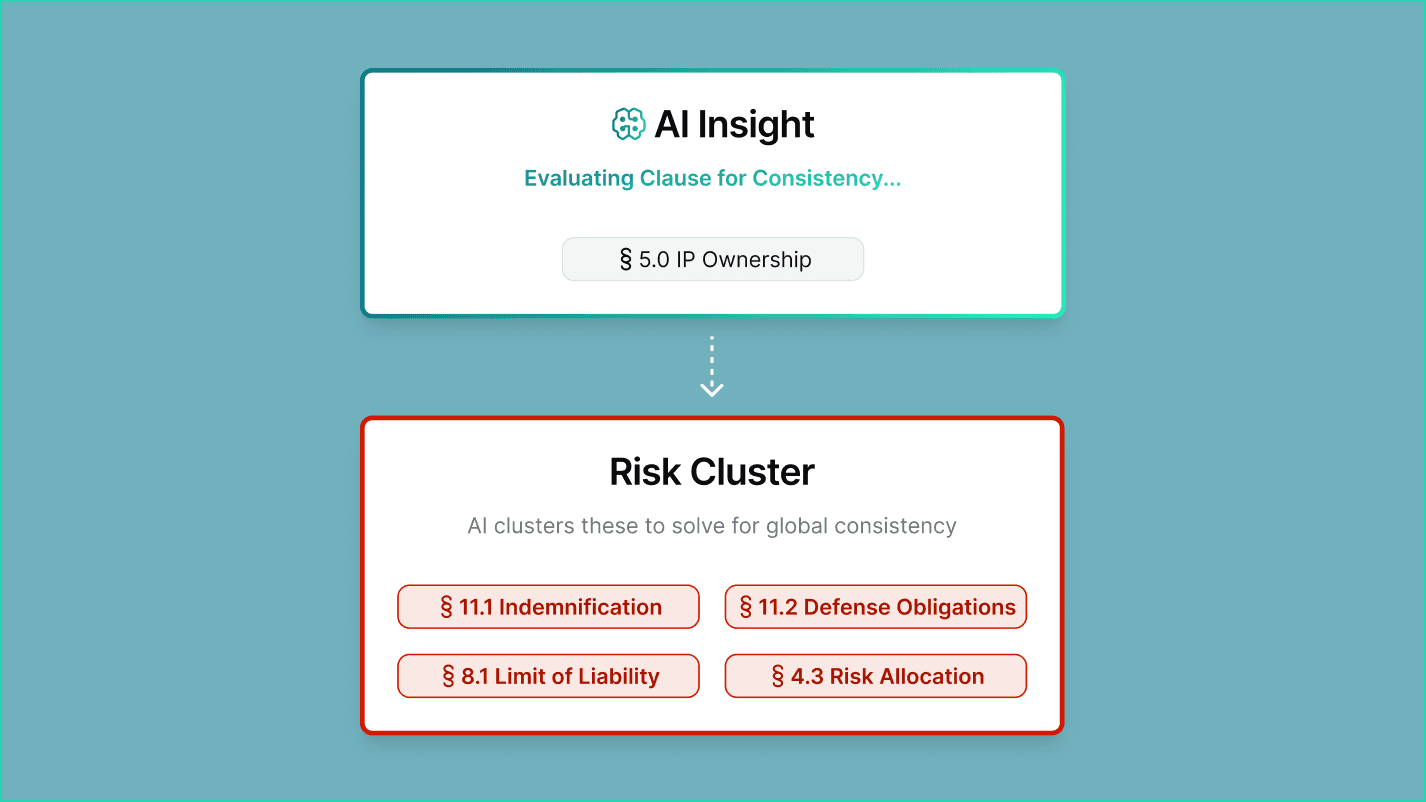
A contract is an interconnected web of logic. Changing a definition on page 2 might invalidate an indemnity clause on page 40. Linear text analysis misses these dependencies, leading to "hallucinated" or dangerous edits.
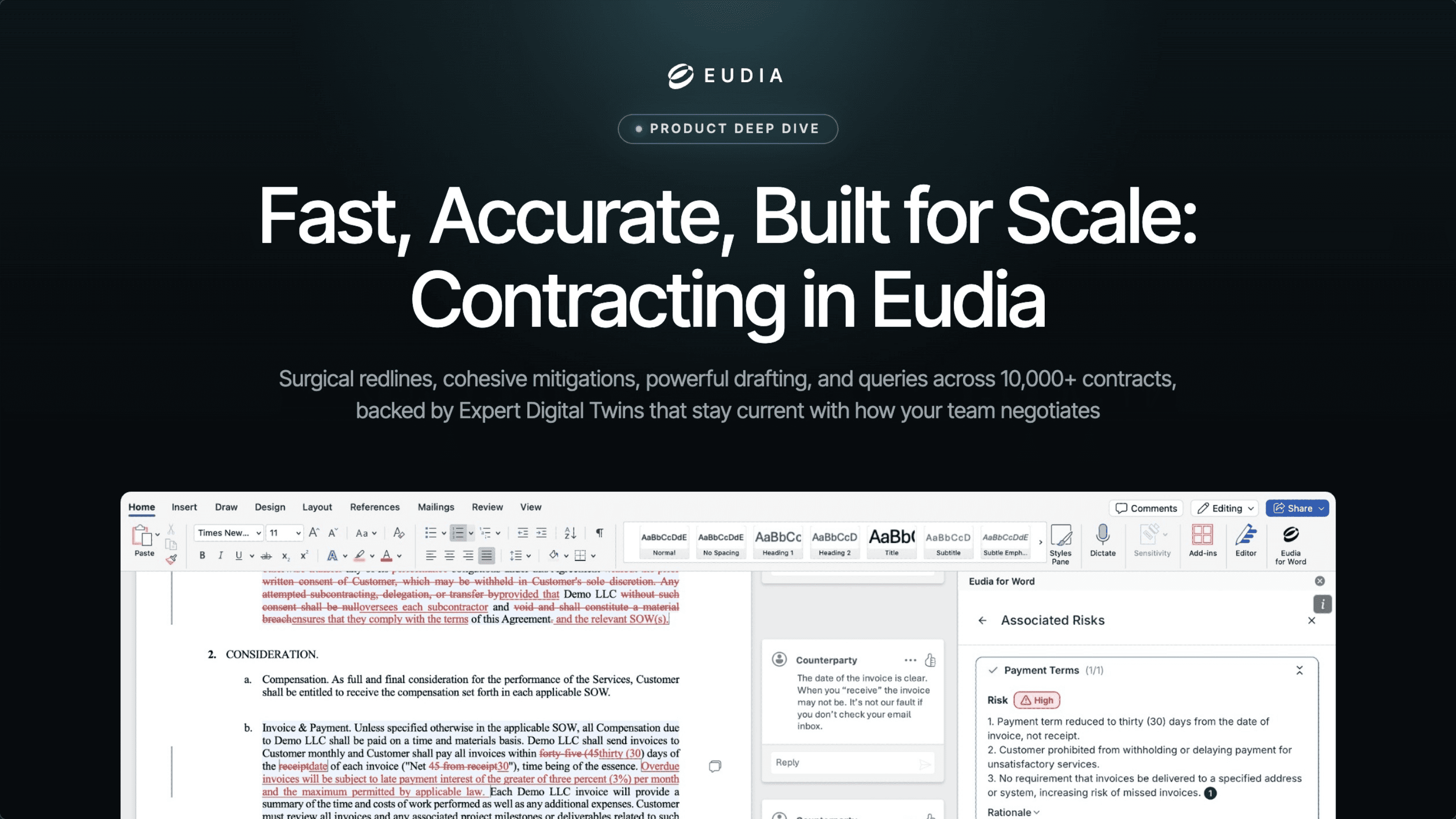
We treat contracts as a "Graph of Risk." Using bipartite graph clustering, our architecture identifies optimal paragraph clusters across an entire document. This allows the system to solve for a global optimum rather than making isolated, local edits that contradict one another. The result is surgical precision that allows internal teams to finalize agreements without sending them out for external review.
3. Act: Hierarchical Reasoning & Auditability
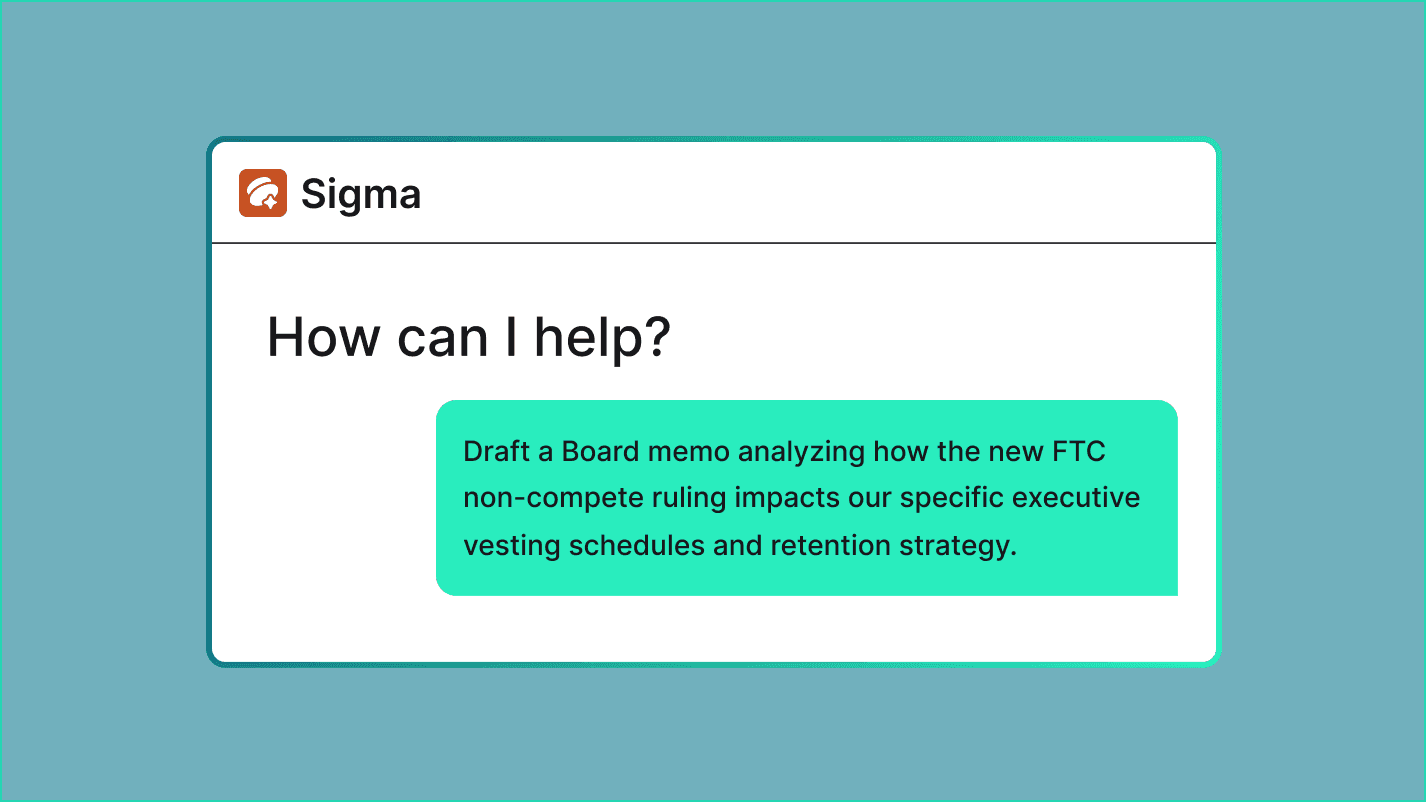
For an enterprise to trust software, the software must be accountable. A "black box" answer is a liability.
We moved beyond standard request-response loops to a Hierarchical Reasoning Orchestrator. Utilizing a "ReAct" architecture and Chain-of-Thought (CoT) prompting, the system is forced to generate detailed reasoning steps before taking an action. Whether it's an agent analyzing a data room for "change of control" provisions or checking a design file for regulatory compliance, the system provides a reproducible audit trail of its logic.
4. Contextualize: Solving the "Cold Start"
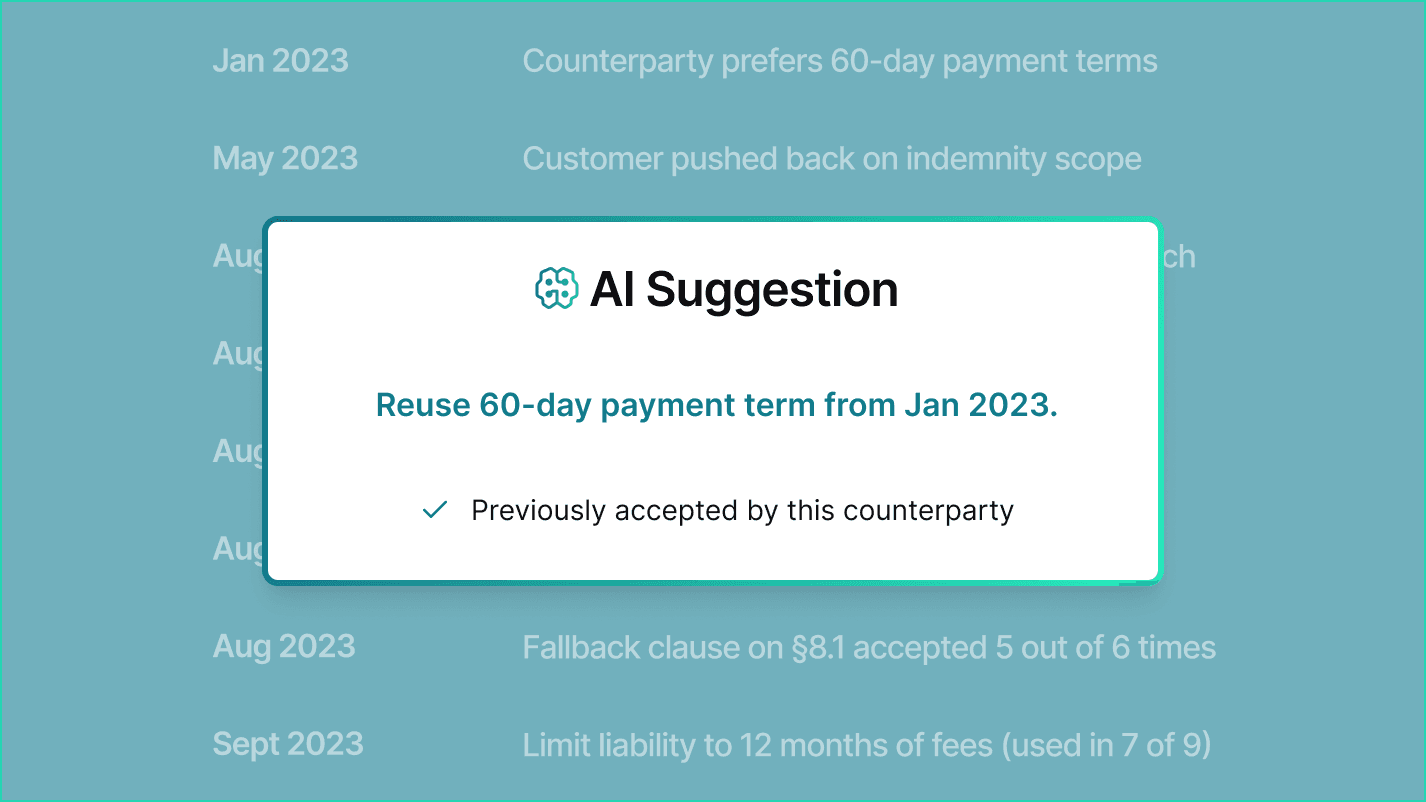
An outside lawyer charges you to "get up to speed" on your history. An AI shouldn't.
We implemented Spatial Intelligence (understanding User, Team, and Org hierarchy) alongside Temporal Intelligence (Long-term memory). By utilizing "Negotiation State Reconstruction," the system reverse-engineers revision histories to learn from past interactions. It solves the "cold start" problem by bootstrapping recommendations based on historical executed contracts, ensuring the AI aligns with the company's specific risk posture from day one.
Infrastructure is the Asset
This architectural approach converts legal spend from an operating expense (renting external time) into a capital asset (building internal intelligence).
The Return on Alignment
When technology is aligned with the enterprise's incentive to save time rather than the provider's incentive to bill it, the results are drastic.
M&A Velocity: Global logistics leaders have used these specialized agents to reduce due diligence timelines from four weeks to two, achieving an 80% reduction in billable hours.
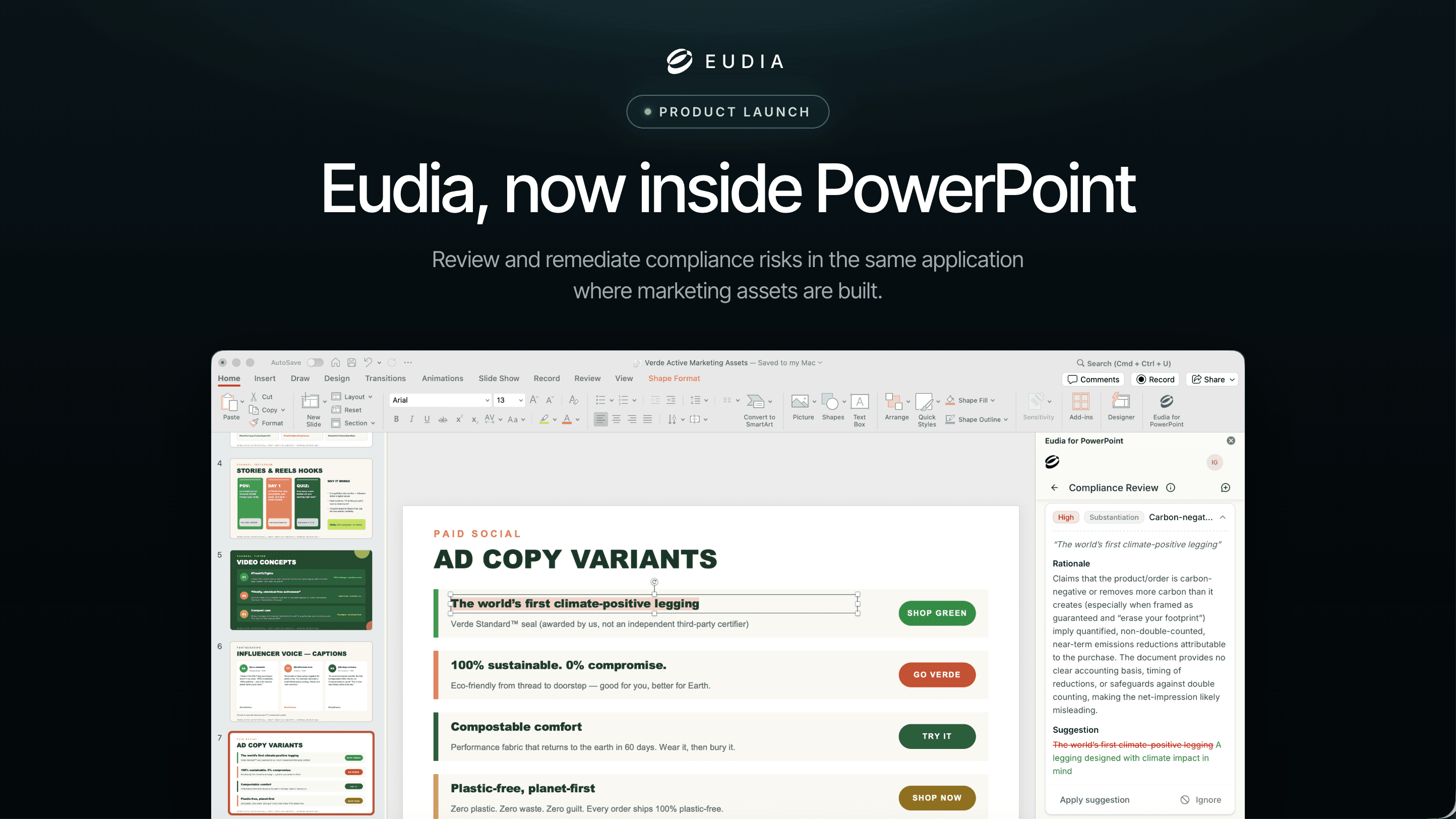
Marketing Efficiency: Multinational energy corporations have cut asset review times in half by analyzing video and images against regulatory guidelines, effectively removing the bottleneck between creative conception and public launch.
Institutional Memory: Instead of paying outside counsel to research the company's own precedents, legal teams are using the system to instantly surface portfolio-level risks and answers.
The future of enterprise legal work isn't about automating the billable hour; it's about eliminating the dependency on it. By bridging the gap between product vision and deep technical engineering, we are building the operating system that makes that future possible.