Introducing the Eudia Platform
Redefining Human and
AI Collaboration
We’ve Built the Building Blocks of the Company Brain
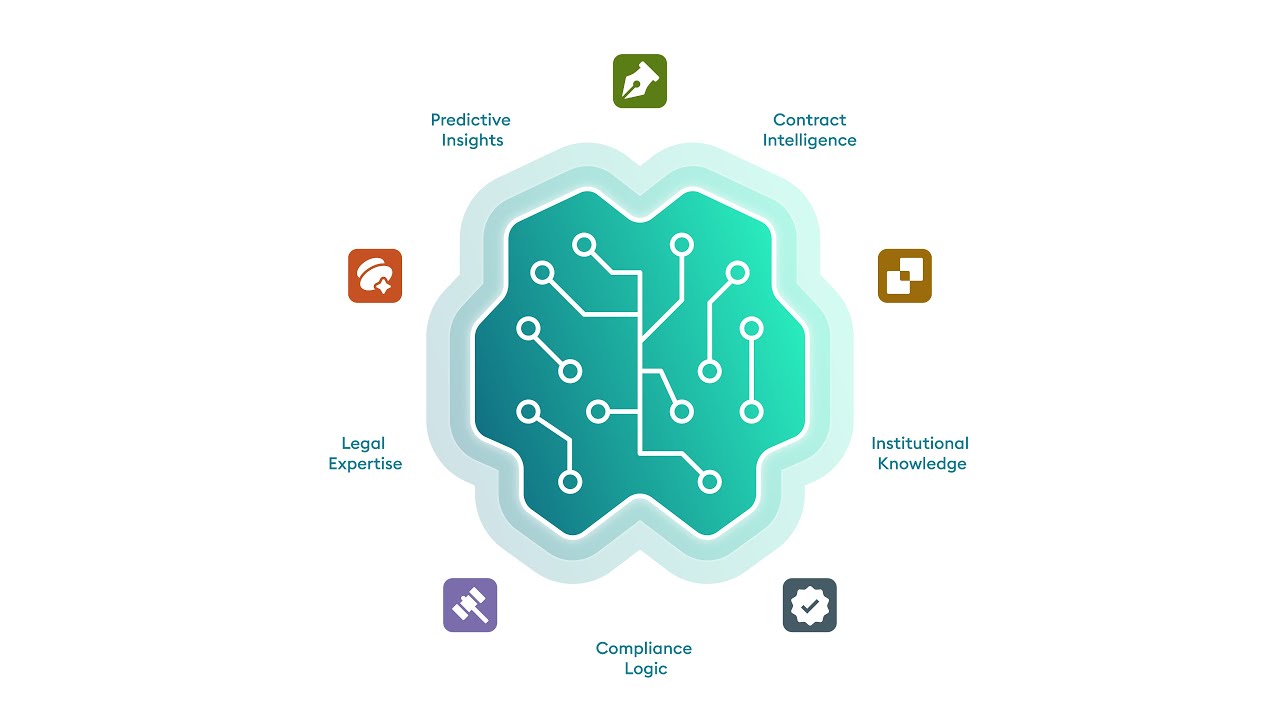
To bridge the "trust gap" in legal, we moved beyond foundational LLMs to build a proprietary "Company Brain." This system does not just process text but all modalities; not just prompted knowledge but Spatial (understanding User, Team, and Org hierarchy) and Temporal Intelligence (Short-term and Long-term memory). This allows Eudia to eliminate the "cold start" problem and reason with institutional context.
Percept
Vision and Structure
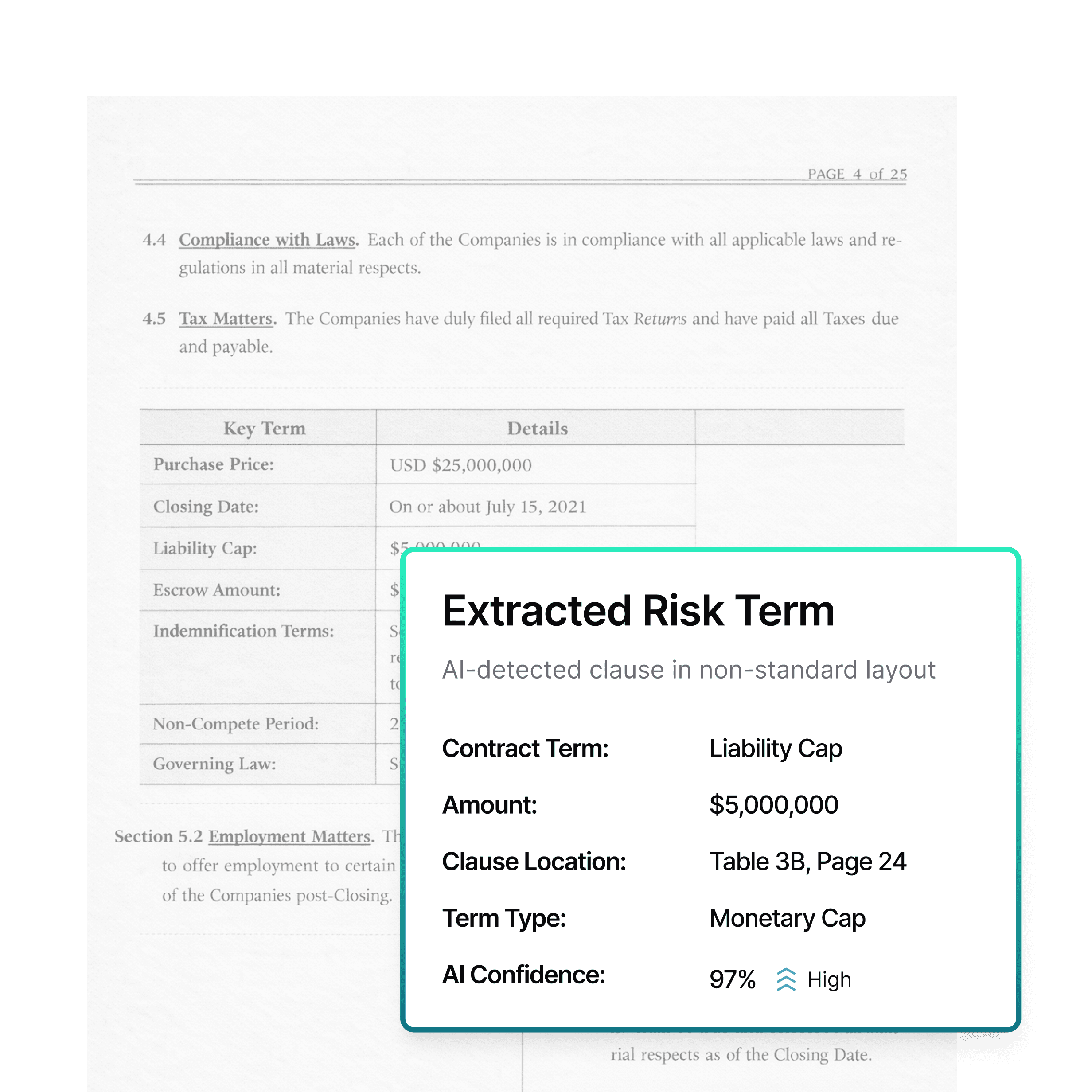
Legal documents are structured, not just text. Our "Content Intelligence" pipeline combines computer vision with Vision-Language Models (VLMs) to correctly interpret layouts, tables, and page boundaries. This ensures liability caps hidden in tables or charts in M&A data rooms are seen and understood.

Percept
Vision and Structure
Legal documents are structured, not just text. Our "Content Intelligence" pipeline combines computer vision with Vision-Language Models (VLMs) to correctly interpret layouts, tables, and page boundaries. This ensures liability caps hidden in tables or charts in M&A data rooms are seen and understood.

Percept
Vision and Structure
Legal documents are structured, not just text. Our "Content Intelligence" pipeline combines computer vision with Vision-Language Models (VLMs) to correctly interpret layouts, tables, and page boundaries. This ensures liability caps hidden in tables or charts in M&A data rooms are seen and understood.

Understand
Agentic Graph
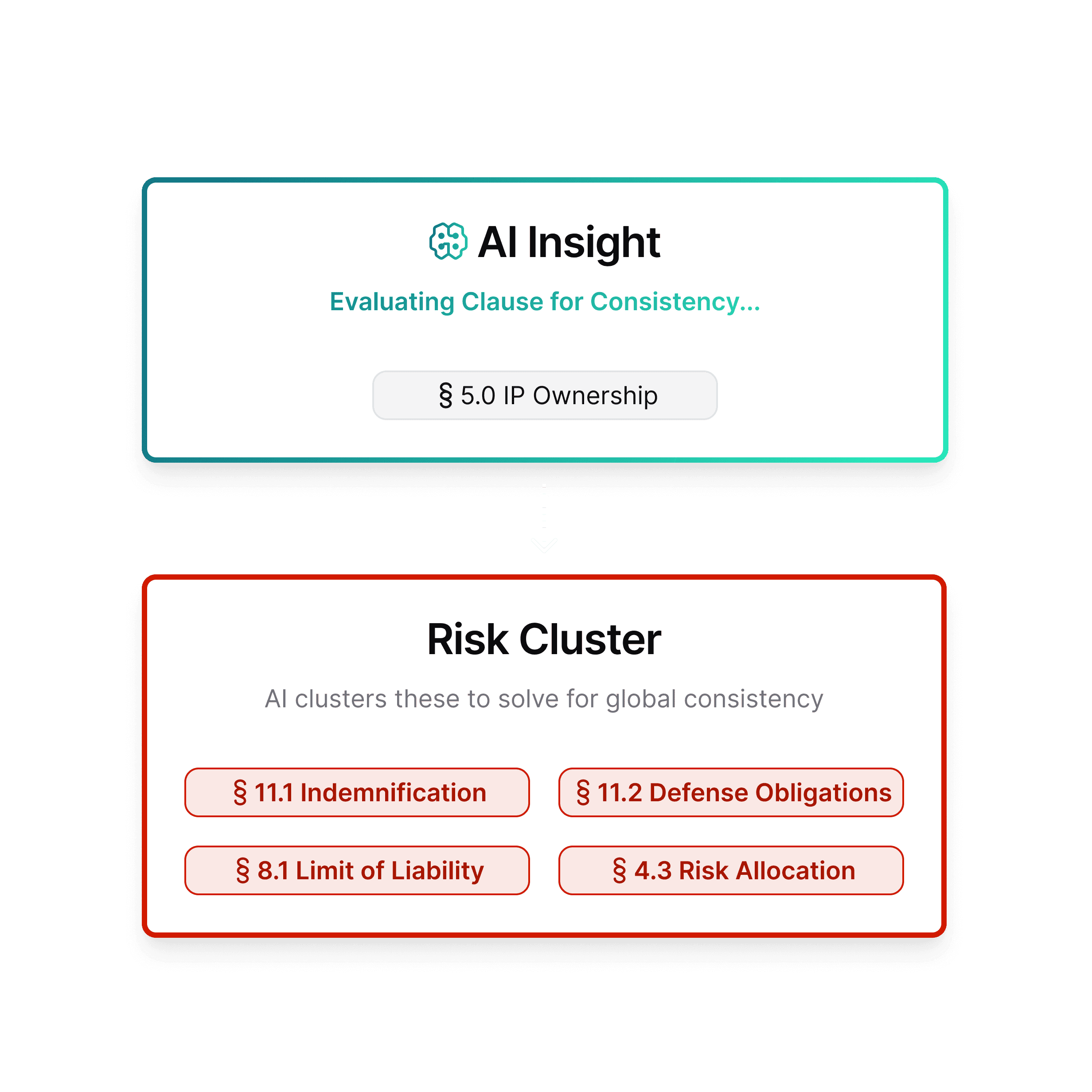
We view contracts as an interconnected "Graph of Risk." Using bipartite graph clustering, the Brain identifies optimal paragraph clusters across an entire document. This ensures that edits are holistic - solving for global consistency rather than making isolated changes that contradict one another.

Understand
Agentic Graph
We view contracts as an interconnected "Graph of Risk." Using bipartite graph clustering, the Brain identifies optimal paragraph clusters across an entire document. This ensures that edits are holistic - solving for global consistency rather than making isolated changes that contradict one another.

Understand
Agentic Graph
We view contracts as an interconnected "Graph of Risk." Using bipartite graph clustering, the Brain identifies optimal paragraph clusters across an entire document. This ensures that edits are holistic - solving for global consistency rather than making isolated changes that contradict one another.

Understand
Reasoning Logic
Legal documents are structured, not just text. Our "Content Intelligence" pipeline combines computer vision with Vision-Language Models (VLMs) to correctly interpret layouts, tables, and page boundaries. This ensures liability caps hidden in tables or charts in M&A data rooms are seen and understood.

Understand
Reasoning Logic
Legal documents are structured, not just text. Our "Content Intelligence" pipeline combines computer vision with Vision-Language Models (VLMs) to correctly interpret layouts, tables, and page boundaries. This ensures liability caps hidden in tables or charts in M&A data rooms are seen and understood.

Understand
Reasoning Logic
Legal documents are structured, not just text. Our "Content Intelligence" pipeline combines computer vision with Vision-Language Models (VLMs) to correctly interpret layouts, tables, and page boundaries. This ensures liability caps hidden in tables or charts in M&A data rooms are seen and understood.

Contextualize
Memory
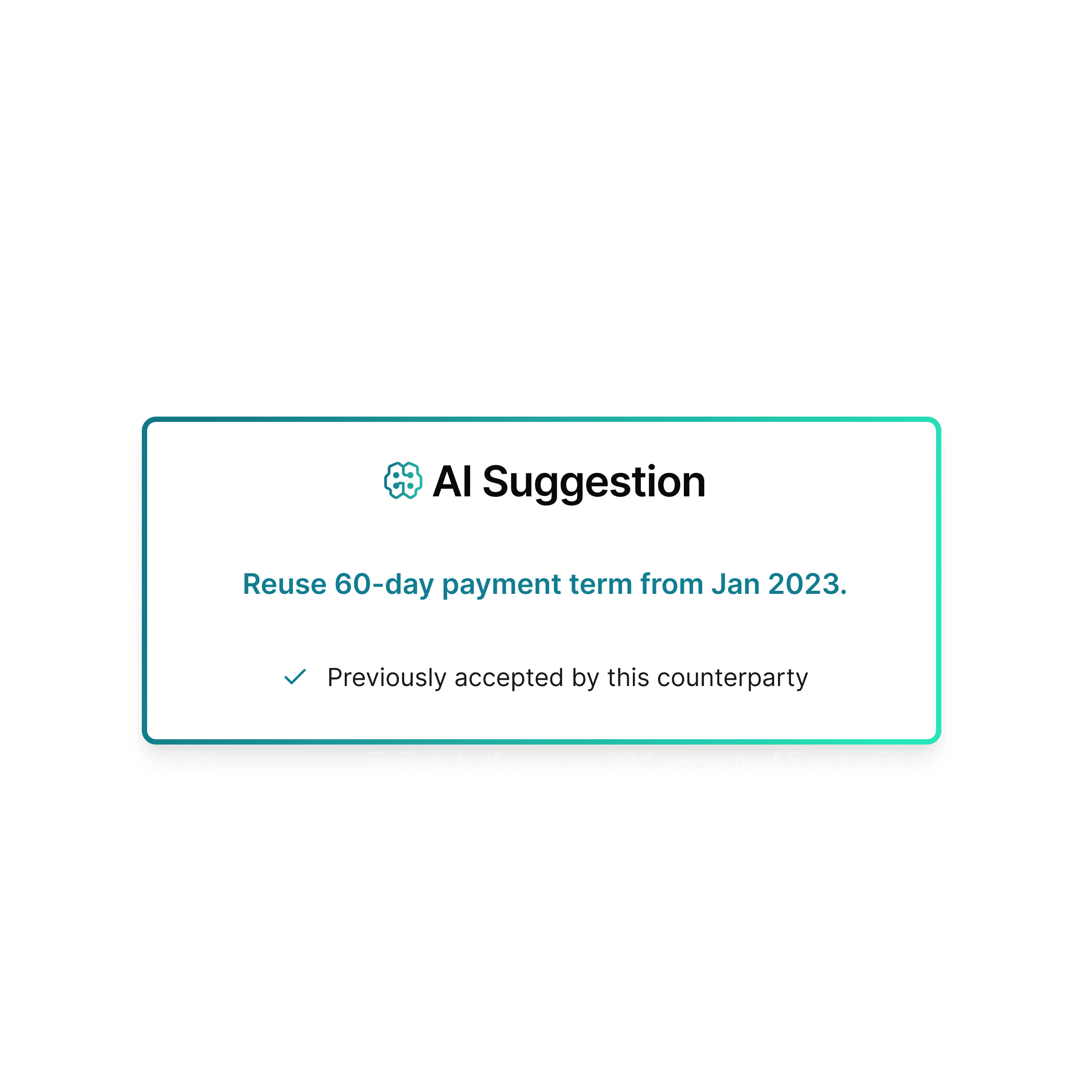
The Brain retains a persistent memory of past negotiations, preferred positions, and risk tolerances. It utilizes "Negotiation State Reconstruction" to reverse-engineer revision histories, learning from every interaction to bootstrap recommendations for future work.

Contextualize
Memory
The Brain retains a persistent memory of past negotiations, preferred positions, and risk tolerances. It utilizes "Negotiation State Reconstruction" to reverse-engineer revision histories, learning from every interaction to bootstrap recommendations for future work.

Contextualize
Memory
The Brain retains a persistent memory of past negotiations, preferred positions, and risk tolerances. It utilizes "Negotiation State Reconstruction" to reverse-engineer revision histories, learning from every interaction to bootstrap recommendations for future work.